

 LinkedIn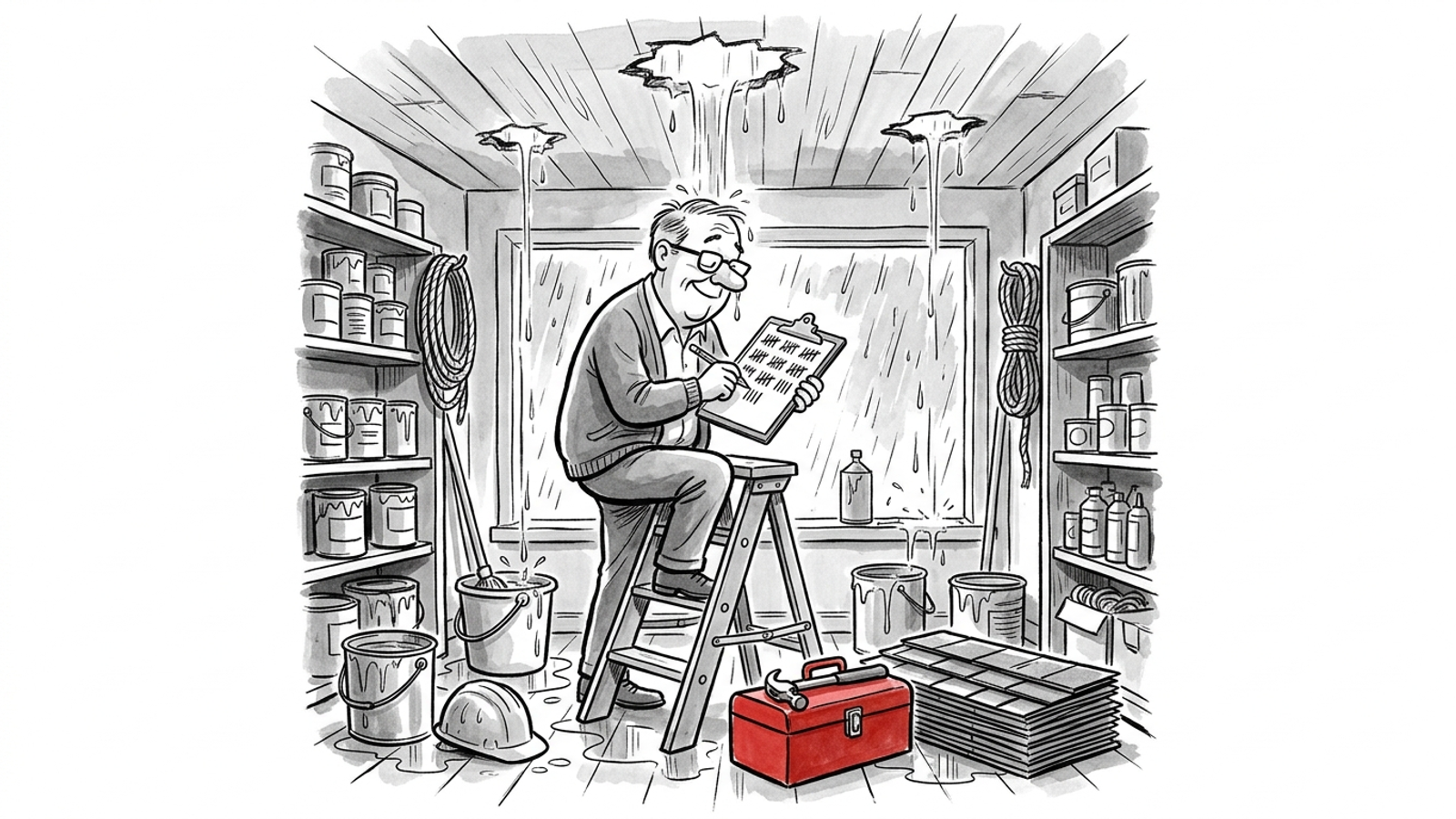
Counting how often ChatGPT mentions your brand is the AI-era version of reporting impressions. A small business can spend every Tuesday watching that number move while the pages that never get cited stay broken.
The standard advice sounds more disciplined than it is: build a prompt list, poll ChatGPT and Gemini, log your mention share, and review the chart each week. I watched performance marketers do much the same thing with impression share and average ad position. It filled client decks. It did not explain why qualified leads were missing.
An AI answer is not a stable Google results page. Ask for the best walk-in coolers for restaurants in the morning and your brand might appear third. Ask again that afternoon and it might disappear. Retrieval context and model output can change without a change to your site. A tracker records the appearance, but it cannot tell you what caused it. Worse, an appearance is not a visit, a lead, or revenue.
That is the claim I want small businesses to act on: use prompts to find pages worth fixing, not to build an in-house mention-counting operation. Your limited hours belong on source material an engine can find and cite.
The in-house tracker looks useful until you need an answer
When founders ask me how to monitor AI brand mentions in-house, they usually picture a tidy automated pipeline. The familiar playbook is an API hook, a scheduled Python job, or a $99-to-$200-a-month visibility dashboard polling ChatGPT, Gemini, Perplexity, or Copilot. Every Monday, it runs fifty variations on buyer queries: best inventory management software for small warehouses, top-rated commercial electricians, most reliable walk-in refrigeration units. A mention turns the cell green. An omission turns it red.
Soon there is a webhook feeding Slack and a slide labelled AI Share of Voice. It feels like engineering. But as marketers discussing these setups in SEO and marketing communities have found, the hard part begins after the script works. Why did the brand appear in Gemini on Thursday but vanish from ChatGPT on Friday? Which page needs changing? The dashboard has no answer. It tells your content team that you were left out, not what to fix.
A green cell is not a buyer
The attraction is familiar from PPC. When leads dip, a monitoring chart gives everyone something to inspect. You can say synthetic mentions rose from 18% to 24% across fifty chosen queries. You still cannot point to the users, pipeline, or closed revenue behind that rise.
Research cited on AI-search click-through behaviour puts clicks on cited ChatGPT URLs near 1.3%, versus roughly 29.2% for top organic Google results. Those are different surfaces, not a neat head-to-head test. The practical distinction is simpler: if an answer types your company name without linking to your site, that mention offers no direct click path. Paying staff to count it while an uncited product page sits untouched is watching the weather instead of insulating the building.

Mention share is impression share in a new costume
Every marketing cycle finds a metric that looks persuasive on a slide when the commercial result is hard to explain. Agencies once led with reach and likes. PPC reports leaned on impression share when a $15,000 monthly ad spend produced fewer qualified leads than expected. Now a prompt tracker reports that query #14 triggered your company name in 42% of test runs. The number looks precise. Its connection to a sale is not.
The mechanism makes weekly trendlines especially shaky. Research on LLM non-determinism describes output changes even with temperature set to zero and greedy decoding enforced. Processing conditions can affect what appears; live retrieval adds another moving part. An assistant answering a commercial refrigeration query is not reading a fixed ranking file. Your brand could appear in eight of ten runs on Monday, two on Wednesday, and nine on Friday without your team changing a page. A movement in mention share is not, by itself, evidence that your market position moved.
A name drop and a source citation do different jobs
The tracker also bundles two different outcomes into the idea of “visibility.” Ziptie.ai’s analysis of citations and mentions describes a mention-source divide: a page may be used as background evidence without a branded name drop, while a name may appear without the useful source link. Its analysis associates branded mentions with existing brand volume and URL citations with factors including topical depth and page structure. If you count only your name in the answer, you miss whether the engine cited your specifications, pricing, or a page where a buyer could take action.
I have seen the older version of this report. An account spends $20,000 and produces twelve leads instead of fifty; the deck opens with “search impression share grew 14%.” Presence on a screen does not pay the client’s payroll. AI prompt tracking can put the same consolation prize in a newer slide.
The wider click picture makes the distinction worth your time. SparkToro and Datos figures discussed by Siteimprove put zero-click behaviour at 65% of standard Google queries and 83% when an AI Overview answers directly. SE Ranking’s domain analysis puts AI-search referral traffic at 0.32% to 1.08% of total web referrals. If you spend your limited hours on this channel, make them count. A citation a buyer can follow deserves more attention than a name in an answer they may never leave.
The red cell cannot tell you why you were excluded
Suppose Monday’s spreadsheet says ChatGPT dropped your business from a recommendation. What do you do next? You cannot raise a bid, add a negative keyword, or rewrite an ad to force the model to include your name. An omission is an alert, not a diagnosis.
In Cognizo’s analysis of 548,534 pages retrieved across 15,000 test prompts, the model cited only 15% of retrieved candidate URLs. A prompt scraper cannot tell you whether your page was never retrieved or was retrieved and passed over. Those failures call for different work. The mention count collapses both into one red cell.
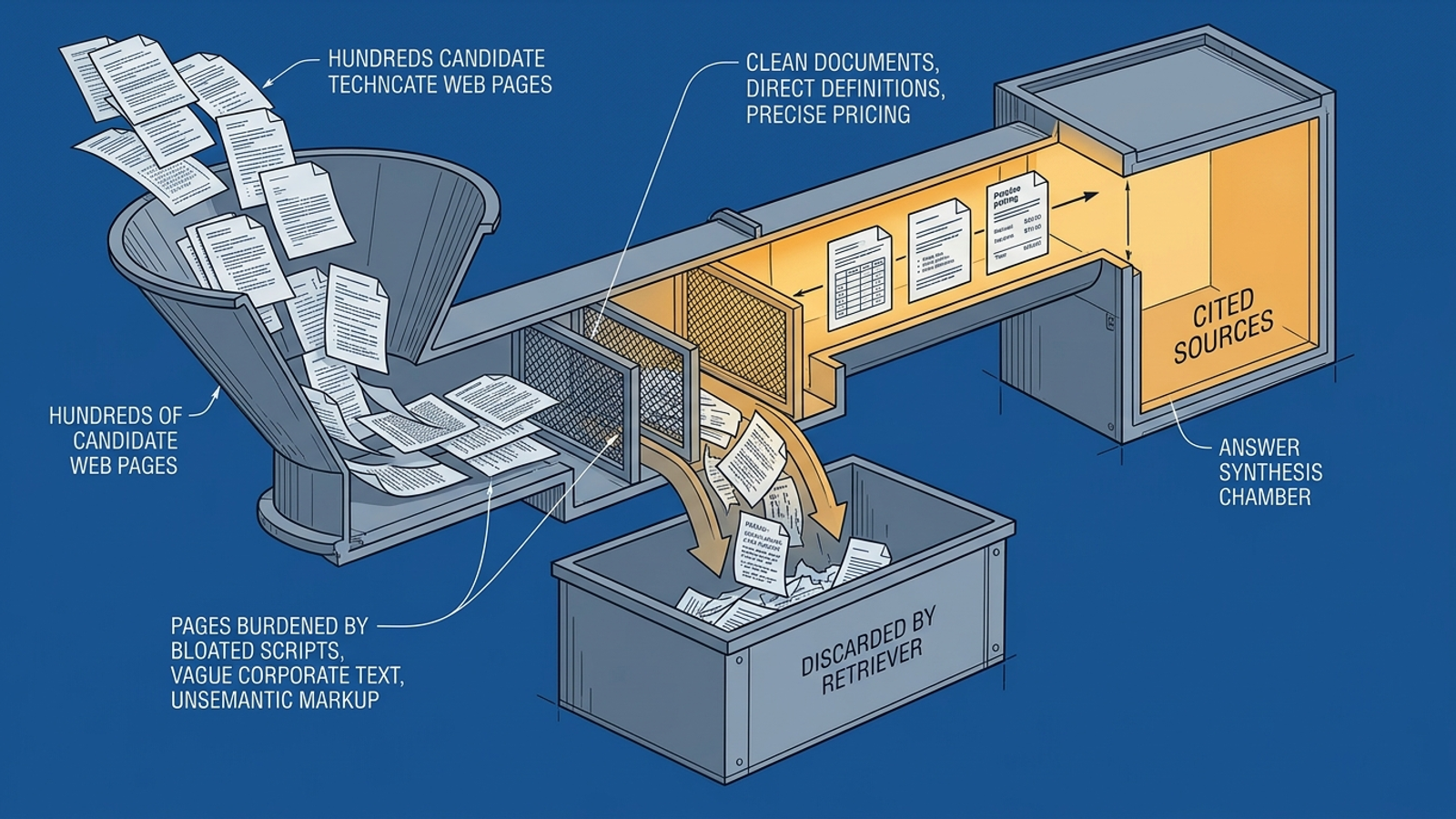
Sometimes the source page is missing. Sometimes it is buried.
I look first for a page that actually answers the buyer’s query. If someone asks for enterprise pricing tiers for warehouse temperature monitoring and your site puts every pricing detail behind “Contact Sales,” the engine has little public detail to cite. A third-party directory or a competitor publishing numbers gives it more to work with. No amount of prompt polling writes your missing page.
Then I look at structure. Retrieval systems work with chunks of content. Product specifications hidden in complicated JavaScript accordions, unlabelled tables, or 3,000 words of introductory corporate prose are harder to match to a specific question than a direct answer on a clearly organised page. The tracker sees another zero. Your team should be inspecting the source page.
The third gap sits off-site. In Cognizo’s evaluation of cited sources across AI platforms, community discussions and independent outlets feature among frequently cited sources. A buyer comparing B2B tools or service contractors may encounter answers grounded partly in that outside material, not just vendor copy. If your business has no authentic footprint where buyers discuss the category, another paragraph on your “About Us” page will not fill the gap. The useful question is which evidence the answer drew on, not how many times it repeated your name.
Replace the weekly scorecard with a short list of page fixes
You do not need a bigger monitoring operation to act on those gaps. Cut the tracking overhead and use a small set of prompts as a diagnostic. The work that follows is less glamorous than a dashboard and far more concrete.
Run 10 to 20 buyer prompts as a smoke test
Keep a fixed list of ten to twenty high-intent prompts. Choose questions from buyers comparing implementation trade-offs, evaluating specifications, or asking about pricing in your niche. Run them manually once a month or during a quarterly account audit. Do not turn the results into a board-level mention-share KPI.
When an engine leaves you out of a core commercial answer, write down the question and inspect the answer. That is your starting point. Treat the missed prompt as a lead on a page problem, not a weekly performance score.
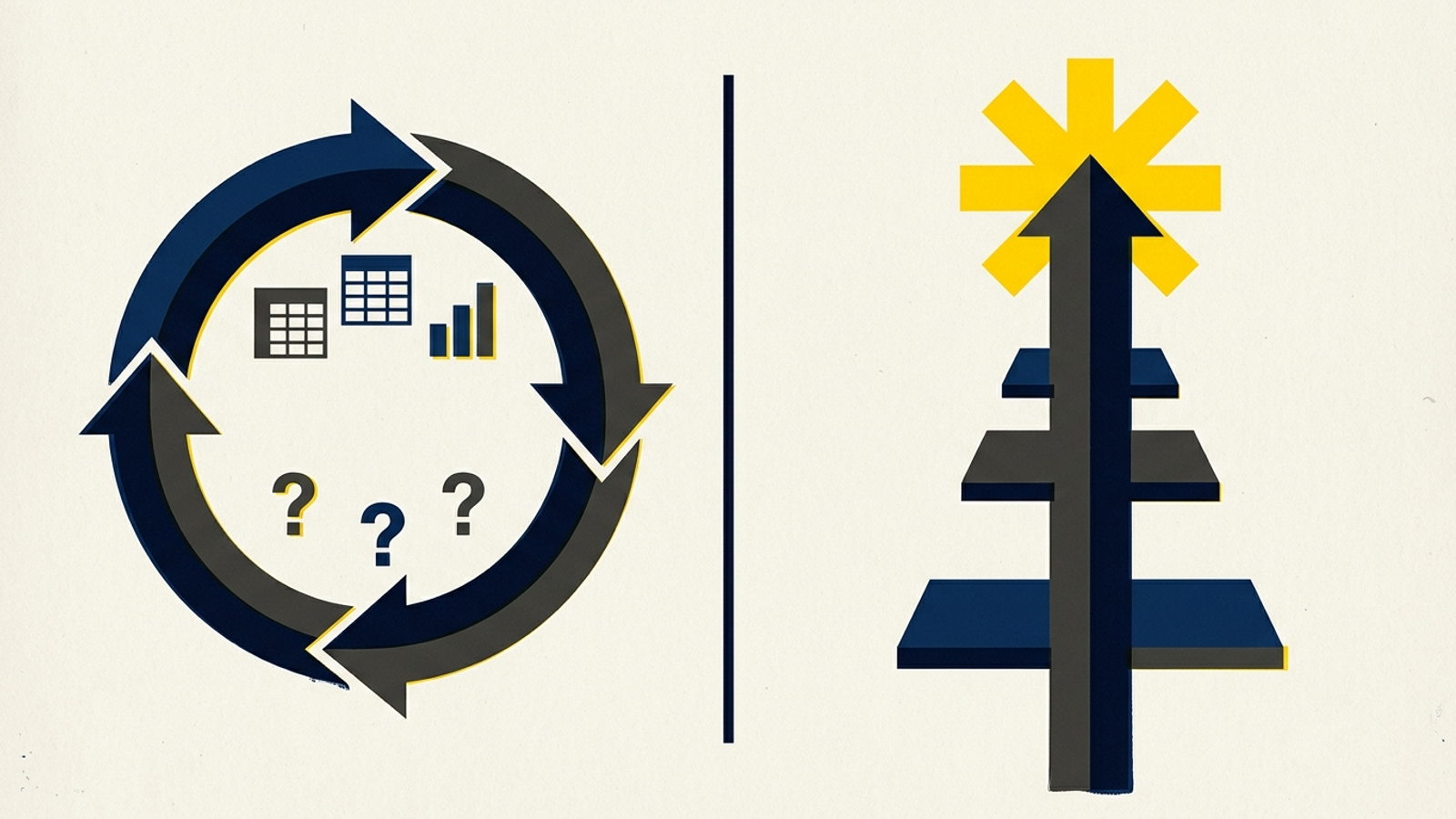
Match each missed question to the page that should answer it
For every important omission, identify the URL on your site that ought to answer the buyer. Then put it beside the sources the engine cited. What does each cited page make easy to find? Is there a direct diagnostic answer, a labelled specification table, a clear comparison, or public pricing detail that yours lacks?
Take a query about commercial freezer defrost-cycle troubleshooting. If the cited guide gives a short definition and an accessible specification table while your answer sits inside a gated PDF or a long promotional article, you have work to assign. Improve the page’s structure and publish the useful details where they can be crawled. Check that the resulting page is accessible. Do not spend the afternoon debating whether a red spreadsheet cell should be orange.
This process will not explain every omission. It will give your developer or content team a URL and a concrete change to consider, which is more than a prompt-count trendline can offer.
Look for cited pages and buyer sessions
Track whether your relevant canonical URLs earn citations, then look in analytics for referral sessions from sources such as chatgpt.com and perplexity.ai. Follow those sessions to the actions that matter: viewing specifications, reaching a pricing page, or booking a demonstration. Where you can connect those actions to pipeline, do it.
A 14-month search study discussed by Search Engine Land found substantially fewer organic clicks for uncited brands on queries with AI Overviews, while cited domains captured more user interactions. That is a better reason to inspect a page than a fall in synthetic mention share. A scraper can tell you your name appeared in a sentence. Your analytics can tell you whether a buyer came to your site and did something useful.
The exception does not apply to most small businesses
There is a case for dedicated prompt monitoring: an enterprise consumer brand watching for harmful claims about its products or services. An airline, pharmaceutical manufacturer, or large bank may need a crisis-communications team to catch answers that say a product is unsafe or flights are cancelled. In that setting, a costly scraper-and-review operation has a job beyond counting mentions.
That is not the job facing most SaaS platforms spending $20,000 a month on search acquisition, ecommerce brands building catalogue sales, or regional service contractors. Their scarce marketing hours are better spent publishing usable pricing details, organising comparisons, improving conversion pages, and pruning negative keywords that waste ad budget. Do not fund an enterprise reputation workflow to avoid making small-business page fixes.
The dashboard sells attention. The work needs execution.
Search marketing has spent years selling software that makes to-do lists and retainers for people who review those lists once a month. AI visibility tools can repeat the pattern: a $200 monthly dashboard displays seventy prompts you are “losing,” then leaves the remediation to the same team that lacked time to do it before.
That capacity mismatch is why we built groas. Rather than asking a client to manage another reporting dashboard or a percentage-of-spend retainer, groas combines autonomous paid and organic search execution with a named human strategist who sets direction and guardrails. Specialized models work continuously on campaign and search-visibility tasks; the strategist owns accountability, and the actions are logged. The point is not a prettier account of what is missing. It is to get the work done.
Stop counting prompts as though a name drop were a customer. Find the pages a buyer needs, make them usable, and pay attention when a cited URL brings someone into your pipeline. If you keep spending your limited hours watching an omission recur, the page behind that omission will still be waiting next Tuesday.